 Reviews

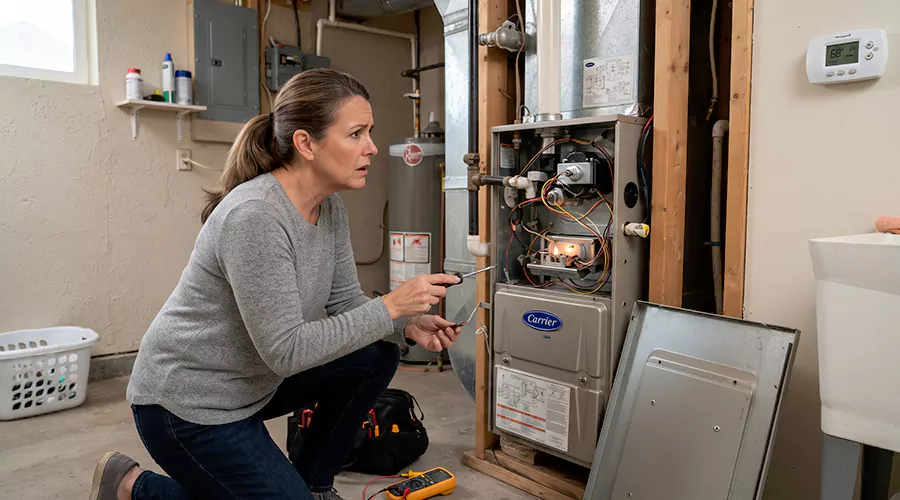
An air conditioner not heating can result from a $0 thermostat setting or a heat-pump repair that reaches $2,400 in 2026. First confirm that your system can produce heat. A cooling-only central air conditioner cannot heat a home. A heat pump can because it reverses the refrigeration cycle during winter.
If your home has a standard central AC paired with a furnace then the heating fault may be on the furnace side. If you have a heat pump then thermostat settings or restricted airflow can stop normal heating. Refrigerant loss or a reversing-valve problem can cause the same symptom.
Identifying which type of equipment you own prevents wasted troubleshooting. It also tells you whether the outdoor unit should be operating while the thermostat is calling for heat.
Does Your Air Conditioner Actually Provide Heat?
A standard central air conditioner provides cooling rather than space heating. A heat pump provides both functions by reversing the direction of heat transfer. Many homeowners call the entire HVAC system the “air conditioner” even when a separate furnace produces the heat during winter. Look at your thermostat first. A heat-pump system usually has Heat and Cool modes that operate through the same outdoor equipment. A home with a conventional furnace may also show Heat and Cool on the thermostat. In that setup the outdoor AC normally stays off while the furnace produces heat. If you have a ductless mini-split with a heat mode then the same equipment usually handles both jobs. ENERGY STAR explains that ductless heat pumps move heat indoors during winter and reverse operation during warmer weather.
Knowing the system type changes the diagnostic path. A reversing valve matters on a heat pump. A flame sensor matters on many gas furnaces. If you describe the problem as HVAC not heating, identify the heating source before checking individual parts. That five-minute step can prevent you from troubleshooting equipment that is not supposed to operate in heating mode.
Why Is the System Running Without Producing Enough Heat?
A system can run without warming the home when the thermostat is set incorrectly or the filter is restricting airflow. Heat pumps can also lose heating capacity because of refrigerant loss. A frozen outdoor coil or a reversing-valve problem can reduce heat delivery even though fans continue running.
The thermostat Is On The Wrong Mode
Set the thermostat to Heat rather than Cool or Fan. Raise the target temperature several degrees above the current indoor temperature. A heat pump may pause briefly before starting. Electronic controls often protect the compressor with a built-in delay after a setting change. ENERGY STAR recommends using Heat rather than Auto mode on a heat pump because Auto can switch operating modes during unusual temperature changes.
The Air Filter Is Restricting Airflow
A dirty filter limits the amount of air passing through the heating system. That can leave rooms cooler even when the equipment itself is operating. ENERGY STAR recommends checking the filter every month during heavy-use seasons. It should be changed when dirty and at least every three months under its general guidance. A useful clue is airflow at the supply vents. Weak airflow throughout the house makes an airflow restriction more likely than a single-room problem.
The Outdoor Heat-pump Coil is Temporarily Defrosting
A heat pump can blow cooler air for a short period while it enters defrost mode. The system temporarily changes operation so it can remove frost from the outdoor coil. That behavior can be normal. Constant cold air is different. Carrier identifies defrost operation as one reason a heat pump can briefly blow cooler air. Persistent ice can instead point toward another fault.
Refrigerant is Low
A heat pump needs the correct refrigerant charge to move heat between the outdoor air and your home. A leak lowers heat-transfer capacity. Low refrigerant can cause weak heating even though the compressor continues running. Refrigerant does not get consumed during normal system operation. Current 2026 cost data places heat-pump refrigerant leak repair at about $300 to $1,200.
The Reversing Valve is Not Switching
A heat pump uses a reversing valve to change between heating and cooling operation. A valve that does not switch correctly can leave the unit operating in the wrong refrigeration direction. Carrier lists a faulty reversing valve among the causes of a heat pump that keeps blowing cold air. Current national 2026 estimates place many reversing-valve repairs between $200 and $650. Some equipment designs can cost more because access and labor differ.
A Furnace Component Has Failed
If your central AC is paired with a furnace then the air-conditioning equipment may have nothing to do with the heating failure. The thermostat can start the blower while the furnace fails to create heat. Gas furnaces depend on ignition and combustion controls. An ignitor failure can stop burner startup. A dirty or failed flame sensor can also interrupt operation after ignition begins. Current 2026 estimates place ignitor work around $150 to $500 and flame-sensor replacement around $150 to $250.
How Does a Heating Problem Progress?
Heating problems often progress from reduced comfort to repeated cycling before a complete shutdown occurs. Early thermostat or filter problems can cost little to correct. Component failures become more expensive when the problem reaches a refrigerant circuit or compressor. Furnace failures follow a different cost path.
| Stage | What you may notice | Possible cause | Typical 2026 cost |
|---|---|---|---|
| Early | Heat does not start after a setting change | Thermostat setting | $0 |
| Airflow loss | Heat feels weak at several vents | Dirty filter | Low DIY cost |
| Control fault | System starts inconsistently | Thermostat | $80 to $350 |
| Heat-pump start problem | Outdoor equipment struggles to operate | Capacitor or contactor | $120 to $400 |
| Heating-mode failure | Unit runs but keeps producing cool air | Reversing valve | $200 to $650 |
| Refrigerant problem | Heating capacity keeps declining | Refrigerant leak | $300 to $1,200 |
| Major heat-pump failure | Compressor cannot move refrigerant correctly | Compressor | $650 to $2,400 |
| Furnace ignition failure | Blower runs without burner heat | Ignitor | $150 to $500 |
| Furnace airflow failure | Little or no air reaches the rooms | Blower motor | $150 to $2,000 |
The heat-pump ranges above come from updated 2026 national repair data. Furnace figures come from separate 2026 component pricing because a furnace uses a different heating process. A lower-cost symptom should not automatically be treated as a minor problem. A $0 thermostat mistake and a failed control board can produce similar behavior from inside the room. One counterintuitive clue is intermittent heating. A system that works again after several attempts has not necessarily fixed itself. Electrical controls can fail intermittently before they stop responding completely.
What Warning Signs Should You Check?
A heating fault becomes easier to narrow down when you observe airflow and operating sounds together. Check whether the thermostat is actively requesting heat. Notice whether air is moving from several vents. Then observe whether the outdoor heat-pump unit or indoor furnace responds to the same heating call.
- The thermostat shows Heat but the indoor temperature keeps falling.
- Supply vents move air that feels close to room temperature after a full heating cycle.
- Airflow is weak at several registers.
- The heat starts only after repeated thermostat adjustments.
- The outdoor heat-pump unit has heavy ice that does not clear.
- The system repeatedly starts and stops before reaching the target temperature.
- The indoor blower runs while a gas furnace never produces burner heat.
- The heat pump stays in operation for long periods with little temperature improvement.
- A breaker trips when heating begins.
- The system suddenly heats normally again after failing earlier.
A search for HVAC heat not working often starts with the thermostat because the same symptom can come from several different components. The operating pattern gives more useful information than the room temperature alone.
Pay attention to safety signals as well. A carbon monoxide alarm near a fuel-burning heating system is not a normal heating symptom. The U.S. Consumer Product Safety Commission says occupants should move outside immediately when a CO alarm sounds and contact emergency services.
What Safe DIY Test Can You Perform?
A 10-minute heat-call test can separate a thermostat problem from an airflow problem without opening the equipment. Set the thermostat to Heat and raise the target about 5°F above room temperature. Wait through the startup delay. Then compare thermostat response with airflow at several supply vents. Start by confirming that the thermostat display is powered. Replace its batteries if your model uses replaceable batteries and the display appears weak. Set the fan to Auto. A fan set to On can circulate unheated room air between heating cycles. Wait five to ten minutes after requesting heat. Heat pumps do not always deliver furnace-like hot air from the vents because they heat by transferring energy rather than burning fuel. Stand at two or three supply registers. Normal airflow with no temperature improvement points toward a different problem than very weak airflow.
Next inspect the filter without entering an electrical compartment. Replace it if the filter is visibly loaded with dust. If you have a heat pump then look at the outdoor unit from a safe distance. Light frost can occur during cold conditions. A coil buried in persistent ice is different from a temporary defrost cycle. Do not remove electrical panels. Do not handle refrigerant components. For a gas furnace do not bypass safety switches or attempt to defeat ignition controls.
When Should You Call a Professional?
Professional diagnosis is appropriate when basic thermostat and filter checks do not restore heat. It is also appropriate after a repeated breaker trip or persistent heat-pump icing. Refrigerant problems and reversing-valve faults require specialized equipment. Furnace combustion faults need proper safety testing before normal operation resumes. A heat-pump technician can measure refrigerant conditions and electrical values. Testing can also determine whether the reversing valve is responding to the control signal. The average heat-pump repair costs about $410 in 2026 according to Angi. Its broader reported range is about $161 to $661 before unusually expensive component failures are considered. A refrigerant leak can cost about $300 to $1,200 to repair. A compressor can cost about $650 to $2,400 under the same 2026 data set.
Furnace diagnosis follows a different path. A technician can check ignition operation and combustion safety. The blower system can also be tested under load. National 2026 furnace repair data ranges from about $64 to $1,475 for many repairs. Certain individual parts can move beyond that range. Blower-motor work can reach $2,000.
Safety takes priority with fuel-burning equipment. Leave the home if a carbon monoxide alarm sounds. CPSC advises calling emergency services after moving outside and remaining out until responders say it is safe to return.
How Can You Prevent the Heating Failure From Returning?
Prevention starts with airflow and routine operating checks. Inspect the filter monthly during winter and replace it when dirty. Keep outdoor heat-pump equipment clear of snow or debris. Schedule a heating-system inspection each year before the high-use season. These steps can catch declining performance before a winter shutdown. ENERGY STAR recommends checking filters once each month. Its general guidance calls for replacement at least every three months when the filter has not already become dirty sooner.
Outdoor heat pumps need unrestricted airflow. Leaves or snow around the cabinet can interfere with heat exchange. Avoid dramatic thermostat setbacks on many heat-pump systems. ENERGY STAR recommends maintaining a steady comfortable setting because large temperature recoveries can trigger less efficient supplemental resistance heat on some systems. Annual maintenance also gives the heating cycle a chance to be checked before cold weather. ENERGY STAR recommends a pre-season heating check in fall.
Current 2026 furnace data places a yearly tune-up around $150 to $200. A heat-pump maintenance plan commonly costs about $150 to $350 per year. Compare that with a refrigerant leak repair that can reach $1,200 or a heat-pump compressor repair that can reach $2,400. The useful maintenance insight is timing. Testing the heating mode before the first cold period gives you time to detect a problem while indoor temperatures are still comfortable.
Conclusion
An air conditioner not heating starts with one basic question: does your equipment use a heat pump or a separate furnace? Check the thermostat and filter before assuming a major part has failed. Persistent cold air or repeated shutdowns need deeper diagnosis. Fuel-burning systems also require attention to CO safety. This week, run a full heating cycle before colder weather arrives.
Frequently Asked Questions
The system may be in defrost mode. A heat pump temporarily changes operation to remove frost from the outdoor coil and can produce cooler indoor air during that period.
Yes if the outdoor equipment is a heat pump. A conventional central AC paired with a furnace usually does not need the outdoor cooling unit during normal furnace heating.
Not necessarily. Heat pumps transfer heat and can supply air that feels less intensely hot than furnace air while still raising the room temperature normally.
Yes. Heating capacity changes as outdoor conditions become colder. Modern cold-climate models are designed to maintain better low-temperature performance than older conventional designs.
Yes. Different thermostat outputs control different operating functions. A thermostat or wiring fault can affect the heating command while cooling continues to operate normally.
Follow the alarm manufacturer’s instructions. CPSC also recommends testing CO alarms monthly and keeping alarms installed on every home level with additional protection outside sleeping areas.